TL;DR
- China's economy grew 4.7 percent in the first half, but Q2's 4.3 percent was the slowest quarter since 2022 as investment slumped.
- Xi Jinping proposed a World AI Cooperation Organization headquartered in Shanghai, positioning China as a counterweight to US-led AI governance.
- Chinese tech giants have ordered more than 2 million Nvidia H200 chips, but Beijing has yet to approve a single shipment.
- A reservoir breach and deadly floods hit Guangxi as nine rivers topped warning levels at the start of peak flood season.
Politics and diplomacy
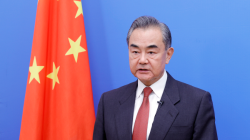
Wang Yi spent the week working two continents' worth of summits. China's foreign minister joined the Shanghai Cooperation Organization foreign ministers' meeting in Cholpon-Ata, Kyrgyzstan, on July 23 and 24, laying groundwork for a leaders' summit in Bishkek later this year that marks the security-and-trade bloc's 25th anniversary. The stop capped a swing that began at the China-ASEAN foreign ministers' meeting in Manila on July 22, where Beijing pressed its case as Southeast Asia's indispensable partner (via CGTN).
Xi Jinping cast himself as regional peacemaker. Meeting the prime ministers of Thailand and Cambodia on the sidelines of Shanghai's AI conference, Xi urged both to settle the border dispute that killed more than 100 people last year before a shaky December 2025 ceasefire, promising that China would play a "constructive role." Both sides still accuse each other of breaches, and Beijing is keen to be seen brokering calm in its own neighborhood (via South China Morning Post).
Xi wants China to help write the rulebook for artificial intelligence. In his keynote at the World Artificial Intelligence Conference in Shanghai, which ran July 17 to 20, Xi proposed a new World AI Cooperation Organization to be headquartered in the city and called for AI to be treated as an "international public good," a direct counter to US-led efforts to control the technology. He dangled 5,000 training slots for developing countries and offered 30 nations access to a Chinese AI-powered weather-warning system (via CGTN).
Business and economy

China's growth engine is running on one cylinder. GDP expanded 4.7 percent year on year in the first half of 2026, but the second quarter's 4.3 percent was the weakest three months since 2022 and undershot the 4.5 percent economists expected. Exports did the heavy lifting, jumping about 27 percent in June (the strongest since late 2021) on an AI-driven scramble to beat tariffs, while urban fixed-asset investment fell 5.7 percent and retail sales crept up just 1 percent (via CNBC).
State-guided muscle is propping up the stock market. Chinese shares jumped in late July after a coordinated wave of corporate buybacks and fund self-purchases, with the tech-heavy ChiNext board soaring 7.1 percent in a single session, as investors braced for a Politburo meeting expected to sketch out stimulus for the rest of the year (via Caixin Global).
The central bank is keeping its powder dry, for now. The People's Bank of China left its benchmark one-year loan prime rate at a record-low 3.0 percent for a 14th straight month in July, and analysts increasingly expect a cut in the second half to shore up the recovery as consumer prices stay soft (via CNBC).
Technology and industry
The great Nvidia chip standoff has a new twist. Chinese tech companies have ordered more than 2 million of Nvidia's H200 AI accelerators for 2026, with ByteDance (TikTok's parent) alone reportedly ready to spend around 100 billion yuan, roughly 14 billion dollars, on chips this year. Washington has cleared the sales, but Beijing has yet to green-light a single shipment, wary of leaning too hard on American silicon while it pushes home-grown alternatives (via South China Morning Post).
Beijing wants to set the rules for the car of the future. The Ministry of Industry and Information Technology unveiled a 2026 auto-standards blueprint tightening technical rules for EVs, in-car AI and semiconductors, including testing and security requirements for the AI models behind automated driving. Analysts expect it to speed "Level 3" cars, which can drive themselves in some conditions, to market in a country where EVs already make up more than two-thirds of new-car sales (via South China Morning Post).
Humanoid robots stole the show in Shanghai. At the World AI Conference, Chinese makers including Unitree, AgiBot and Fourier packed the exhibition floor, with Unitree staging a boxing ring of its 1.32-meter G1 robots and a mock 1990s Shanghai street "staffed" by machines. The message from Xi's flagship AI event: China intends to lead not just in chatbots but in robots, autonomous agents and the hardware around them (via South China Morning Post).
Society
The rain is winning. A reservoir in Guangxi breached after Typhoon Maysak dumped extreme rain on the southwestern region, forcing hundreds to evacuate as the dam gave way, part of a brutal start to China's peak flood season (via South China Morning Post).
The flood maps keep flashing red. Nine rivers across six provincial-level regions ran above warning levels this week after heavy rain and upstream surges, and forecasters warn that much of northern China could see 20 to 50 percent more rain than usual from late July into August, even as heat health alerts blanket other parts of the country (via China Daily).
A rare flicker of good news on China's demographic dashboard. Marriage registrations rose 10.8 percent in 2025 to 6.76 million couples, some 657,000 more than the year before, offering a slim hope for a birth rebound. Economists caution the deeper trend is grim: the fertility rate hovers near 1.0 child per woman, among the lowest ever recorded for a large country, weighed down by housing costs and cutthroat education competition (via South China Morning Post).
Sports
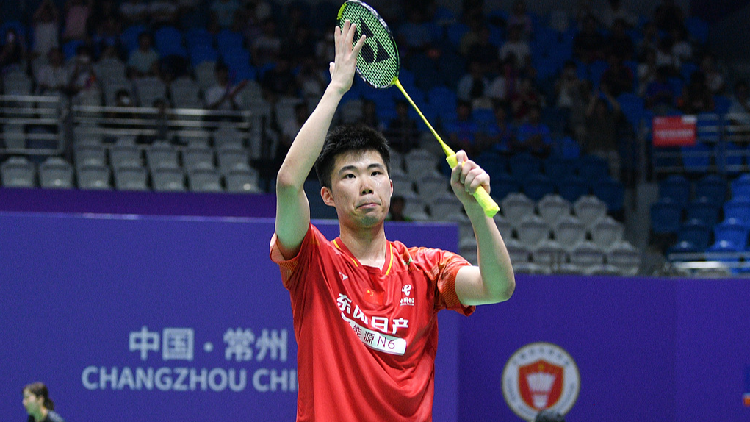
Home advantage cuts both ways at the China Open. At the badminton tournament in Changzhou, China's Weng Hongyang upset Danish former world number one Anders Antonsen, though the host contingent turned in mixed results as several favorites fell short (via CGTN).
China loses a piece of basketball's regional plumbing. FIBA said it will move its Asian office back to Kuala Lumpur, relocating the continental federation's base as the sport reorganizes its Asia-Pacific operations (via Xinhua).
Culture and entertainment
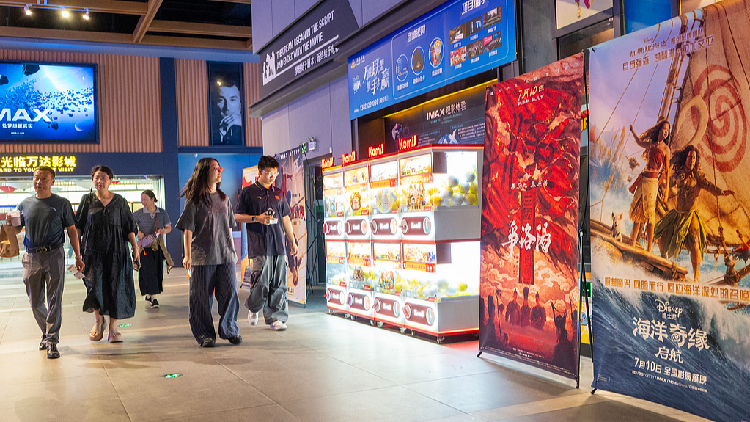
China's movie business crossed a milestone with the summer barely warm. National box-office takings for 2026 topped 20 billion yuan (about 2.9 billion dollars) by July 20, a marker the industry reached as the crowded summer season kicked into gear (via CGTN).
The summer slate is betting on home-grown stories. State media says this year's lineup runs heavy on domestic animation rooted in traditional Chinese culture, with roughly a dozen animated features anchoring the season, as filmmakers try to push past familiar formulas across history, comedy, science fiction and drama (via Xinhua).