TL;DR
- Bitcoin held near $65,000 even as the Magnificent Seven lost roughly $797 billion in a single day, hinting at an early split from the AI trade.
- The EU's 21st Russia sanctions package targets crypto platforms tied to a payments network that has moved about $120 billion in sanctions-evading funds.
- Two exploits this week drained a combined $31 million: $23.75 million from Ostium via a faked Bitcoin price feed and about $7.5 million from the Verus-Ethereum bridge.
- Andrew Tate's DADDY memecoin cratered 97 percent from its peak to under a $5 million market cap after his July 18 arrest on trafficking and assault charges.
Markets and majors

Bitcoin just did something unusual: it ignored a market panic. On July 24 the Magnificent Seven megacap tech stocks had their worst day since April 2025, shedding roughly $797 billion as fears over AI overspending took hold (Alphabet raised its capex forecast to $205 billion a year, and Tesla's Elon Musk called 2026 "a massive capex year"). Bitcoin barely flinched, holding near $65,400, down less than 1 percent on the day and up around 3 percent on the week. Altcoins were softer: Ethereum slid 3 percent to about $1,879, XRP fell 2 percent to $1.11, and Solana dropped 3 percent to $76. The angle worth watching is crypto's relative calm, a possible early sign it is decoupling from the AI trade it has often tracked (via CoinDesk).
Traders are quietly betting Bitcoin has room above spot, but the conviction is cooling. Nearly $5 billion of open interest (the value of outstanding contracts) has piled into Bitcoin's $70,000 and $72,000 call options on Deribit, about 18 percent of the platform's $28 billion in Bitcoin options. The skew is lopsidedly bullish, with roughly 39,000 calls against just 3,800 puts at the $70,000 strike, and one trader spending $3.4 million on those calls alone. With Bitcoin near $64,357, both strikes sit above the current price. Much of the wager rides on the CLARITY Act passing before month-end, but those odds have slipped from 51 percent to 38 percent, prompting some traders to unwind (via CoinDesk).
Protocols and upgrades
Tokenized bank deposits are the new frontier, and two firms want them to move anywhere. On July 23, LayerZero (an omnichain interoperability protocol that lets tokens move between blockchains) and the Keeta network announced a partnership to make tokenized commercial bank money transferable across Ethereum, Solana, Base, and Keeta itself. The tokens, dubbed "Keeta stablecoins," are pitched as backed by actual commercial bank deposits held through Bivo, a US-licensed fintech, with the issuing bank keeping full authority. LayerZero says they will launch later in July in US dollars plus eight other currencies. Treat the eye-catching throughput claim (11.2 million transactions per second in a stress test with Google's Spanner team) as a company claim, not an independently verified figure (via The Block).
Uniswap holders are deciding whether the largest decentralized exchange should finally start charging for itself. Two on-chain governance proposals, with voting open July 19 to 26, would switch on protocol fees for selected Uniswap v4 pools across seven chains, including Ethereum, Base, Arbitrum, and the newly launched Robinhood Chain. A companion proposal from founder Hayden Adams would turn on fee collection for older v2 and v3 pools on Robinhood Chain. The fees feed the UNI token burn set up by December's "UNIfication" overhaul, which passed with 99.9 percent support and torched 100 million UNI at the start. Uniswap says its Robinhood Chain deployments processed about $6 billion in cumulative swap volume as of July 10 (via The Block).
Lightning Labs wants to make Bitcoin payments something a developer, or an AI agent, can bolt on in an afternoon. On July 22 the firm released an alpha of Wavelength, a non-custodial toolkit that lets apps embed self-custodial Bitcoin payments without running a node or managing channels. It bundles an on-device wallet, supports on-chain Bitcoin and Lightning via atomic swaps, and exposes the same API to AI agents through the Model Context Protocol, enabling fractional-cent payments. It launched on Signet and testnet with invitation-only mainnet access; during the closed alpha, Lightning transactions carry a 1 basis point service fee plus routing costs (via Bitcoin Magazine).
Regulation and policy

Brussels is going after crypto's role in dodging sanctions, and for the first time it is reaching beyond its own borders. The EU adopted its 21st sanctions package against Russia on July 24, weighing a ban on third-country crypto service providers and targeting 14 unnamed platforms tied to Russia's "A7" cross-border payments network, which the bloc says has processed roughly $120 billion in sanctions-evading transactions. The package also freezes the assets of 94 banks and financial institutions and bans dealings with 33 more Russian lenders, spanning the UAE, Panama, Georgia, and beyond. High Representative Kaja Kallas said the measures hit "over a hundred banks and crypto operators." Russia, for its part, passed its own crypto regulation on July 21, effective September 1 (via CoinDesk).
The US crypto market-structure bill that traders have been betting on looks likely to miss its window. Senate Majority Leader John Thune said the Digital Asset Market Clarity Act will probably not clear Congress before the roughly August 7 summer recess, sharply cutting its odds of passing in 2026. Part of the holdup is a fight over ethics limits on President Trump's crypto business (he disclosed around $1.4 billion in crypto earnings for 2025). White House crypto adviser Patrick Witt is urging Senate Democrats to accept the negotiated restrictions rather than push for tougher enforcement, telling them "you don't get to hit two home runs with one swing of the bat" (via CoinDesk).
Federal investigators are trying to claw back the proceeds of crypto scams that preyed on lonely people. On July 22, prosecutors and the Secret Service filed five civil forfeiture complaints in Washington, D.C., seeking more than $25 million in crypto tied to romance and investment fraud, including $12.1 million from romance schemes and $10.4 million from fake investment platforms. Investigators traced the money across hundreds of wallets and more than 270 suspected scam transactions, with over 200 romance-scam victims across the US and Canada. The Scam Center Strike Force behind the effort, launched in November 2025, says it has recovered more than $800 million to date (via CoinDesk).
Institutions and ETFs
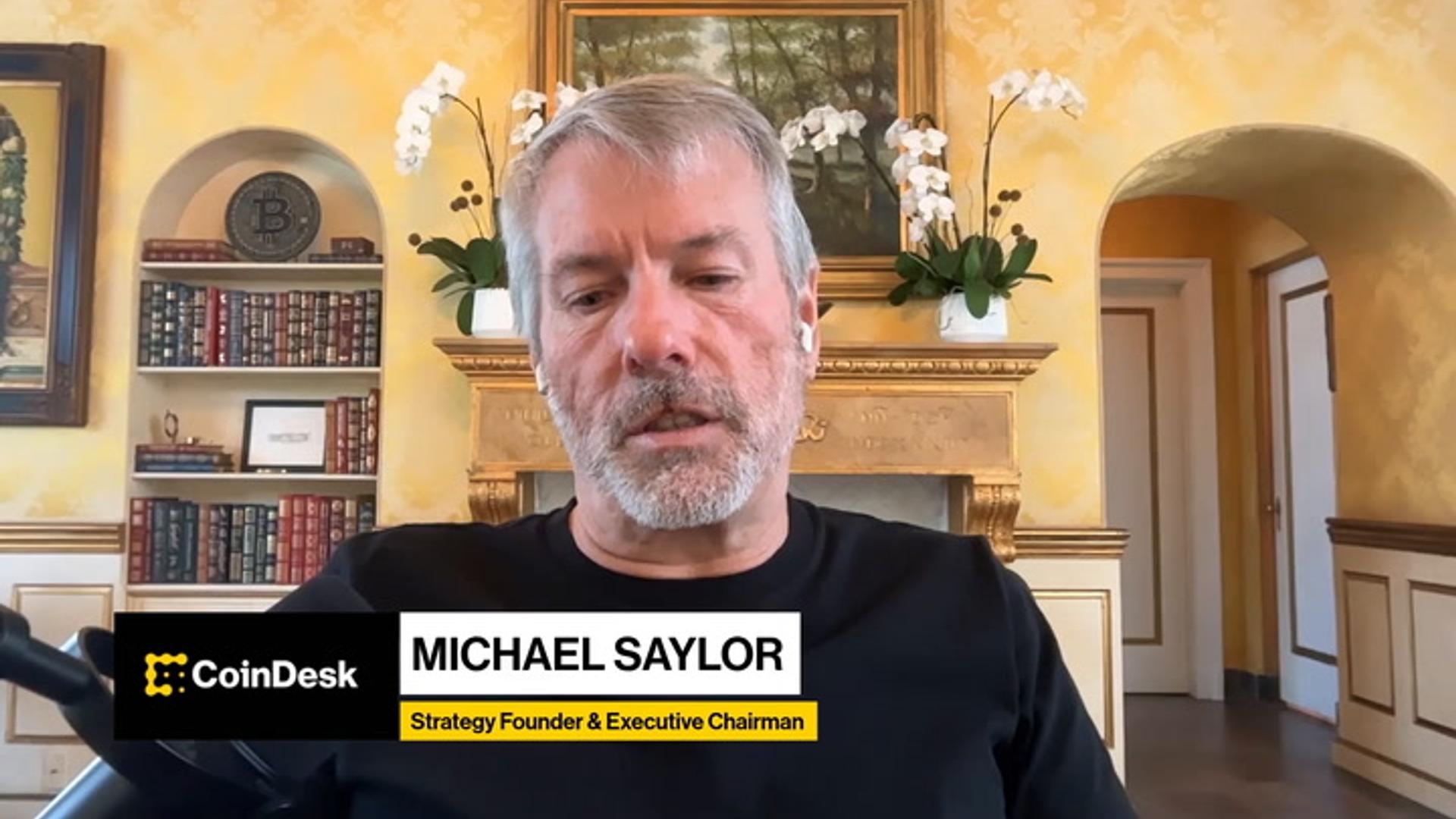
Michael Saylor's Strategy, the corporate face of the Bitcoin treasury trade, is rewriting how it grades itself as the bear market drags on. The firm rolled out a new reporting framework meant to show common shareholders their real Bitcoin exposure after debts. Strategy holds 843,775 BTC worth about $55.6 billion, but after subtracting $6.8 billion in convertible debt and $15.5 billion in preferred stock, its "Net Reserve" comes to $36.6 billion. New yardsticks include an mNAV pinned at 1.0x and a "BTC Breakeven Annual Return Rate" of 3.22 percent. The context is bruising: Bitcoin is roughly 50 percent below its all-time high, and Strategy's own stock sits about 84 percent below its November 2024 peak (via CoinDesk).
Money is trickling back into Bitcoin funds, but nobody should mistake a trickle for a flood. US spot Bitcoin ETFs pulled in $273 million over two weeks, their first sustained positive stretch after an eight-week run of more than $8 billion in outflows. The catch, as analysts note, is scale: that two-week haul barely tops the smallest single week of the preceding slump. Ether funds have been the brighter spot, and the demand is strikingly concentrated. Of the $96 million that flowed into spot ether ETFs over three days earlier in the month, BlackRock's ETHA fund absorbed $45.3 million in a single day, leaving eight rival products to split under $5 million (via CoinDesk).
Security and exploits
A faked Bitcoin price was all it took to drain nearly $24 million. An attacker manipulated the price-feed contract of Ostium, a leveraged trading protocol on Arbitrum, to report Bitcoin at both $5,000 and $60,000 inside a single transaction, then used the fake numbers to milk artificial profits from the protocol's vault. The $23.75 million loss is confirmed through on-chain analysis by multiple security firms. The exploiter routed about 12,084 ETH through the KyberSwap exchange and sent 10,540 ETH into Tornado Cash, the mixing service used to obscure a trail of funds (via Rekt).
The Verus-Ethereum bridge got hit again, and by the same kind of flaw that burned it in May. On July 23 an attacker abused the bridge (the software that moves assets between two blockchains) to trigger unbacked payouts on the Ethereum side, draining a mix of ETH, tBTC, USDC, and other tokens. Security firms Blockaid and CertiK estimate the loss at roughly $7.5 million; note that figure is an outside estimate, not an official disclosure from the protocol. The thief swapped the haul for 3,916 ETH and funneled it into Tornado Cash (via The Block).
Allbridge became the week's cautionary tale in how a flash loan can be weaponized. An attacker took out a $1.12 million flash loan (an uncollateralized loan repaid within the same transaction) from Solana lender Kamino, used it to skew the ratios in Allbridge Core's stablecoin pool by rapidly swapping USDC for USDT, then withdrew funds at artificially favorable rates before bridging the proceeds to Ethereum. Allbridge confirmed the $1.65 million loss in its own statement, corroborated by security firms PeckShield and CertiK (via The Block).
Culture and NFTs

The influencer memecoin trade just got a brutal reminder that these tokens live and die on one person's headlines. Andrew Tate's Solana-based DADDY token has crashed 97 percent from its 2024 peak of $0.29 to around $0.008, a market cap under $5 million, after falling 25 percent in two days. The slide followed the July 18 arrest of Tate, 39, and his brother Tristan, 38, by US Marshals on a sealed warrant tied to UK extradition proceedings and charges including rape, trafficking, and assault. Despite claiming "no contact with the outside world," Tate has kept posting from a Miami detention center, and related tokens tied to him have imploded around 99 percent (via Protos).
Even a fintech CEO's own account is fair game for a memecoin scam. On July 23, attackers hijacked Robinhood chief executive Vlad Tenev's personal X account to shill a token called Vladhood, falsely billing it as the "official Robinhood chain mascot" and posting a contract address alongside a promise of an in-app listing. Blockchain explorers quickly flagged it a "potential scam," and the token logged roughly 1,868 transactions before the post was removed. The hack hit only Tenev's personal handle, not Robinhood's official accounts, and the team worked with X to restore access (via The Block).