TL;DR
- A cabinet seating swap that put Vice President Gibran away from President Prabowo has revived talk of a rift at the top of Indonesian power.
- Bank Indonesia surprised markets by holding rates at 5.75%, betting on FX intervention rather than another hike to steady a rupiah near 18,000 per dollar.
- Jakarta is folding cash aid for 18 million people into village cooperatives, routing welfare through a network President Prabowo has made his signature project.
- Oil above $100 and fresh US tariffs knocked Indonesian stocks nearly 2% lower, ending a 10-session winning streak on the IDX.
Politics and policy

Sometimes the loudest political signal is a chair. At a recent cabinet meeting Vice President Gibran Rakabuming Raka (the son of former president Joko Widodo) was seated among senior ministers rather than beside President Prabowo Subianto, and the swap has set Jakarta talking about whether the relationship between the country's top two leaders has cooled. Palace watchers are reading the arrangement as a demotion in optics if not in title, though officials have offered no explanation and nothing formal has changed about Gibran's role (via The Jakarta Post).
Indonesia has sailed into more pointed geopolitical waters, opening a joint naval exercise with Russia out of Vladivostok. For a country that guards its non-aligned tradition closely, drilling alongside Moscow's Pacific Fleet is a notable step, and it lands while Jakarta is also courting Washington on trade. The military frames it as routine cooperation, but the timing gives it weight (via Antara News).
Indonesia joined Arab nations in condemning Israel over actions at the Al-Aqsa mosque compound in Jerusalem, a reliable flashpoint for the world's largest Muslim-majority country. Foreign ministry statements like this play as much to a domestic audience as to the region, and Palestinian solidarity remains one of the few foreign-policy issues that unites Indonesia's fractious parties (via Antara News).
Business and economy
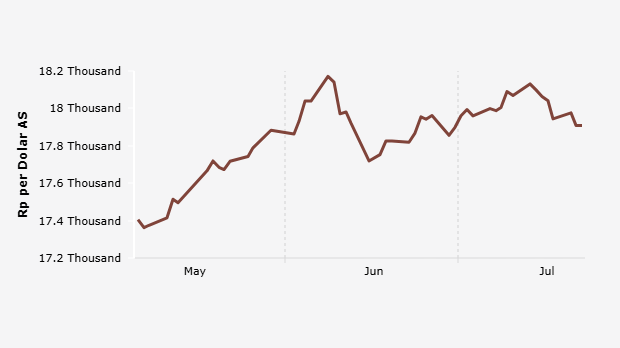
Everyone expected another hike; Bank Indonesia blinked instead. On July 22 the central bank held its benchmark rate at 5.75%, surprising markets that had priced in a move to 6.00% after 100 basis points of tightening since May. Rather than keep raising the cost of money, Governor Perry Warjiyo is now leaning on other levers to defend the rupiah, which is hovering near 18,000 per US dollar: higher yields on its SRBI bills, cheaper currency hedging, and direct intervention in the market (via Katadata).
The stock market's winning streak hit a wall. After 10 straight sessions of gains, the IDX Composite fell nearly 2% as Brent crude pushed above $100 a barrel and a fresh round of US tariffs rattled exporters. For a market that had been quietly grinding to five-week highs, the double hit of pricier oil and trade uncertainty was a sharp reminder of how exposed Indonesian equities remain to forces set well outside Jakarta (via Jakarta Globe).
Indonesia is betting big on gas it will not see for two more years. The government says it is targeting first output from a roughly $15 billion North Hub project in 2028, part of a push to hit ambitious 2030 production goals and slow the decline of its aging fields. It is the kind of long-lead energy bet that only pays off if demand and prices hold, but Jakarta is framing it as central to keeping the lights on and the import bill down (via Jakarta Globe).
Technology and industry
The TikTok Shop fight is finally heading for a courtroom. Indonesia's antitrust watchdog, the KPPU, is nearing a formal trial in its monopoly probe of TikTok Shop, the e-commerce arm the ByteDance-owned app wove into the country's largest social platform after buying local marketplace Tokopedia. The case tests how far a foreign giant can bundle shopping into social video in a market where millions of small sellers depend on it, and a ruling against TikTok could reshape how live-commerce operates across the archipelago (via Jakarta Globe).
One of Indonesia's digital banks is quietly proving the model works. Bank Jago, the GoTo-backed lender, posted a 54% jump in second-quarter net profit on the back of stronger loan growth, crediting its tie-ins with investing apps Bibit and Stockbit for pulling in customers cheaply. In a funding climate where Indonesian startups have struggled to raise, a profitable fintech showing durable growth is the rarer story (via DealStreetAsia).
Indonesian companies are eyeing Hong Kong for a second act. With Hong Kong's IPO market reviving, a pipeline of IDX-listed firms is exploring dual listings there to reach the deeper pool of institutional money that Jakarta's exchange struggles to attract on its own. It is a pragmatic workaround for a market that wants global capital without waiting for global capital to come to it (via DealStreetAsia).
Society
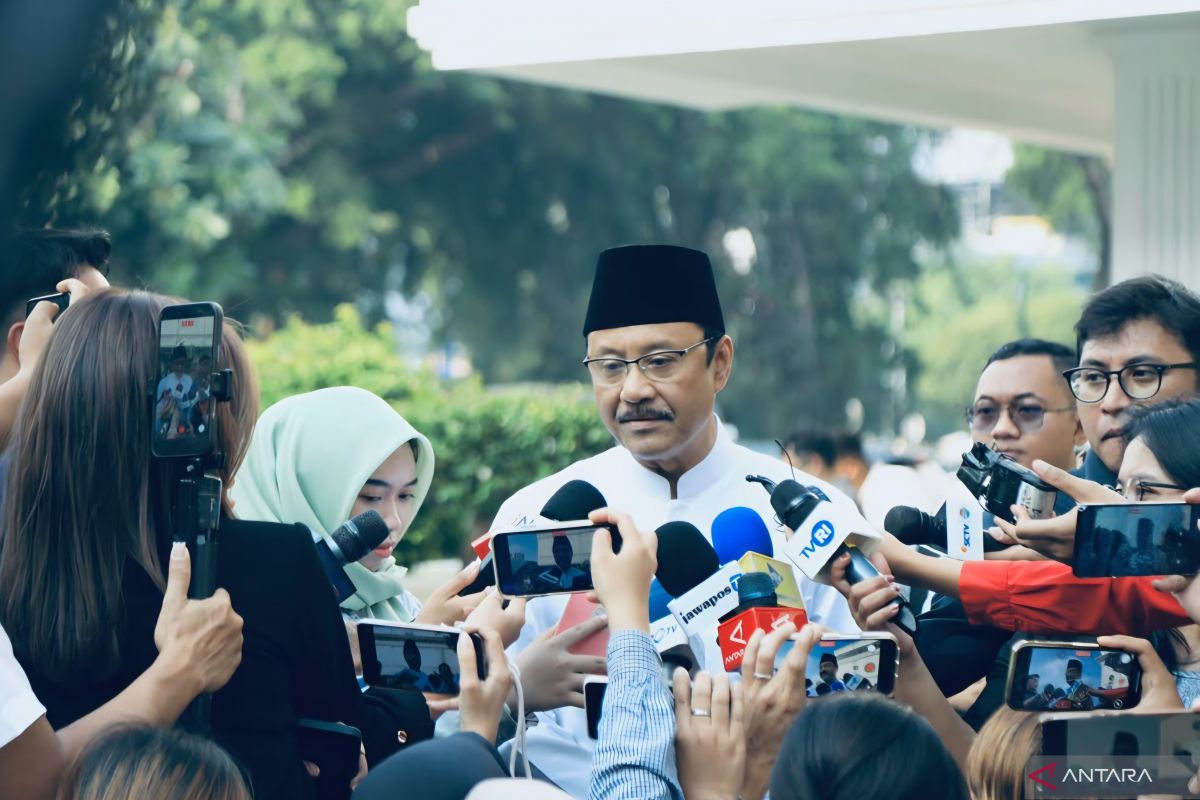
Indonesia wants your welfare payment to run through the village co-op. The Social Affairs Ministry is building a scheme to channel cash aid and subsidized goods (3-kg LPG cylinders, fertilizer, rice, cooking oil) to roughly 18 million beneficiaries through the Red and White Village Cooperatives, the network President Prabowo has made a signature project. State banks BRI and BNI would run service points or pay aid straight into cooperative accounts. Minister Saifullah Yusuf insists co-op operators "would have no authority to alter beneficiary data," with verification done automatically, an assurance aimed squarely at fears the network could become a patronage machine (via Antara News).
Aceh is ready to move from rescue to rebuild. The province enters its post-disaster recovery phase in August, closing the emergency chapter of flooding that battered communities and turning to the slower work of repairing homes, schools, and roads. Recovery is where disasters quietly test a government long after the cameras leave, and for Aceh the coming months will show whether promised aid actually reaches the people who lost the most (via Antara News).
Bali has drawn a line under a members-only club that catered to foreigners. Authorities banned a Dutch pair tied to an exclusive foreigner-run venue on the island, the latest move in a running crackdown on expatriates seen as flouting local rules or carving out spaces that shut out Indonesians. Bali's economy leans on foreign money, but its patience for behavior read as entitled has visibly thinned (via Antara News).