TL;DR
- Xbox launched backward compatibility on PC and handhelds for the first time, with four original Xbox games playable across every Game Pass plan.
- Nintendo's Switch 2 jumps from $449.99 to $499.99 in the US on September 1, an unusual mid-generation price hike blamed on soaring memory costs.
- Samsung revealed its first Android XR smart glasses at Galaxy Unpacked, teasing a fall release with no price, deepening its Google-backed challenge to Meta.
- Amazon folded its Luna cloud-gaming service into the Prime Video app, dropping free streaming games in front of roughly 200 million Prime subscribers.
PlayStation

PlayStation kept the platform news low-key this week, with no State of Play and no hardware moves. The headline for subscribers is July's PlayStation Plus Game Catalog, the Extra and Premium tier that swaps a rotating library of downloadable games in and out. This month's additions are led by Ubisoft's open-world shooter Avatar: Frontiers of Pandora, Team Ninja's samurai epic Rise of the Ronin, and Firefighting Simulator: Ignite, with Mighty Morphin Power Rangers: Rita's Rewind rounding out the marquee names (via PlayStation Blog).
Premium members, the top tier that layers on classic games and streaming, also get two PS2-era throwbacks: the telekinetic shooter Psi-Ops: The Mindgate Conspiracy and the David Cage thriller Indigo Prophecy, both live globally as of July 21 (via PlayStation Blog).
If you would rather buy than rent, the PlayStation Store Summer Sale opened on July 15 with the usual sweep of discounts across the digital storefront, Sony's answer to Steam's seasonal blowouts (via PlayStation Blog).
Xbox
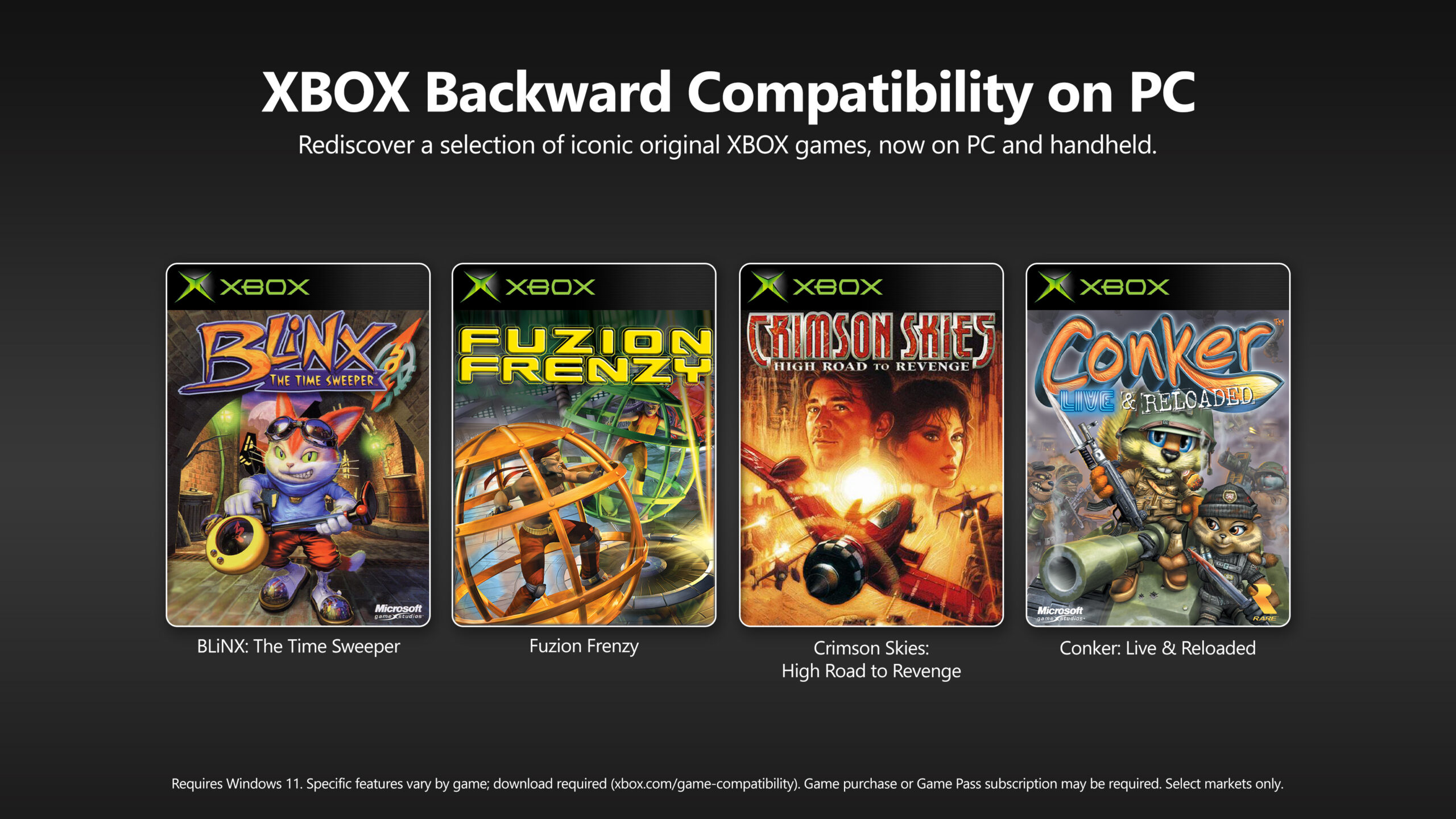
Xbox crossed a line it had never crossed before: original Xbox backward compatibility now runs on Windows PCs and handhelds, not just Xbox consoles. Launched July 22, the program debuts with four back-catalog titles, BLiNX: The Time Sweeper, Conker: Live and Reloaded, Crimson Skies: High Road to Revenge, and Fuzion Frenzy, all included across every Game Pass plan. Existing digital console licenses carry over automatically through Xbox Play Anywhere, and the PC versions add up to 4x resolution upscaling (rendering the game at a higher internal resolution for a sharper image), VSync, anisotropic filtering, and enhanced anti-aliasing. It runs on handhelds too, including the ROG Xbox Ally, and it fits Microsoft's growing habit of treating Windows, not just the console, as its real gaming platform (via Xbox Wire).
The Game Pass calendar is loading up as well. Xbox detailed its second July wave, headlined by Halo: Campaign Evolved arriving day one on July 28 across Cloud, console, handheld, and PC, a remake that adds HD visuals, up to four-player online co-op, three new missions, and an expanded arsenal. Also in the mix: survival builder The Planet Crafter, the day-one thriller Shift at Midnight, and action title Hell is Us, with most day-one drops landing on the Ultimate and PC tiers (via Xbox Wire).
Nintendo
Nintendo's big Switch 2 moment this week is a game, not a gadget. Splatoon Raiders launched July 23 as the series' first proper single-player, story-focused spin-off, a Switch 2 exclusive that trades the usual ink-splattering multiplayer arenas for a full campaign, and the reviews landed hard. IGN handed it a 9 out of 10, calling it "an amazing action RPG with an expertly executed loop," and the wider roundup skews strongly positive, a meaningful win for Nintendo's newest console at $49.99 digital (via Nintendo Life).
Hanging over all of it is the clock on Switch 2's price. Nintendo confirmed the standalone console rises from $449.99 to $499.99 in the US on September 1, with a matching bump to 499.99 euros in Europe and 679.99 dollars in Canada, an unusual mid-generation hike the company ties to "changes in market conditions" as an AI-driven memory shortage pushes component costs up industry-wide (via VGC). With roughly five weeks left before the increase, Nintendo has quietly discounted its "Choose Your Game" Switch 2 bundle in the US ahead of the revision, a last window to buy at the old price (via Nintendo Life).
PC hardware
Valve's next headset looks ready to ship any day now. Every tell points to an imminent launch for the Steam Frame, the standalone SteamOS VR headset that streams your PC library over a dedicated 6GHz wireless dongle: hardware has cleared US customs, FCC filings are public, and a "Great on Frame" storefront section has quietly gone live. What Valve still has not said is when it ships or what it costs. Retailer-database listings pegging it around $950 for a 512GB model are unconfirmed leaks, not official figures, so treat the number as a rumor until Valve names a price. It follows the Steam Machine, Valve's living-room PC that shipped in late June from $1,049 (via PC Gamer).
The reason so much gaming hardware keeps getting pricier comes down to one squeeze: memory. AI data-center demand has driven a severe DRAM and NAND shortage, with Samsung, SK Hynix, and Micron shifting the bulk of their output to high-bandwidth memory for AI accelerators. Tom's Hardware reports the surge is only just beginning to cool as buyers hit an affordability wall, with prices still climbing through the third quarter of 2026. Spot pricing on a common 16Gb DDR5 chip roughly quadrupled inside a single quarter, and it is the same force behind the recent price hikes on Nintendo, Sony, and Microsoft hardware (via Tom's Hardware).
VR and AR headsets
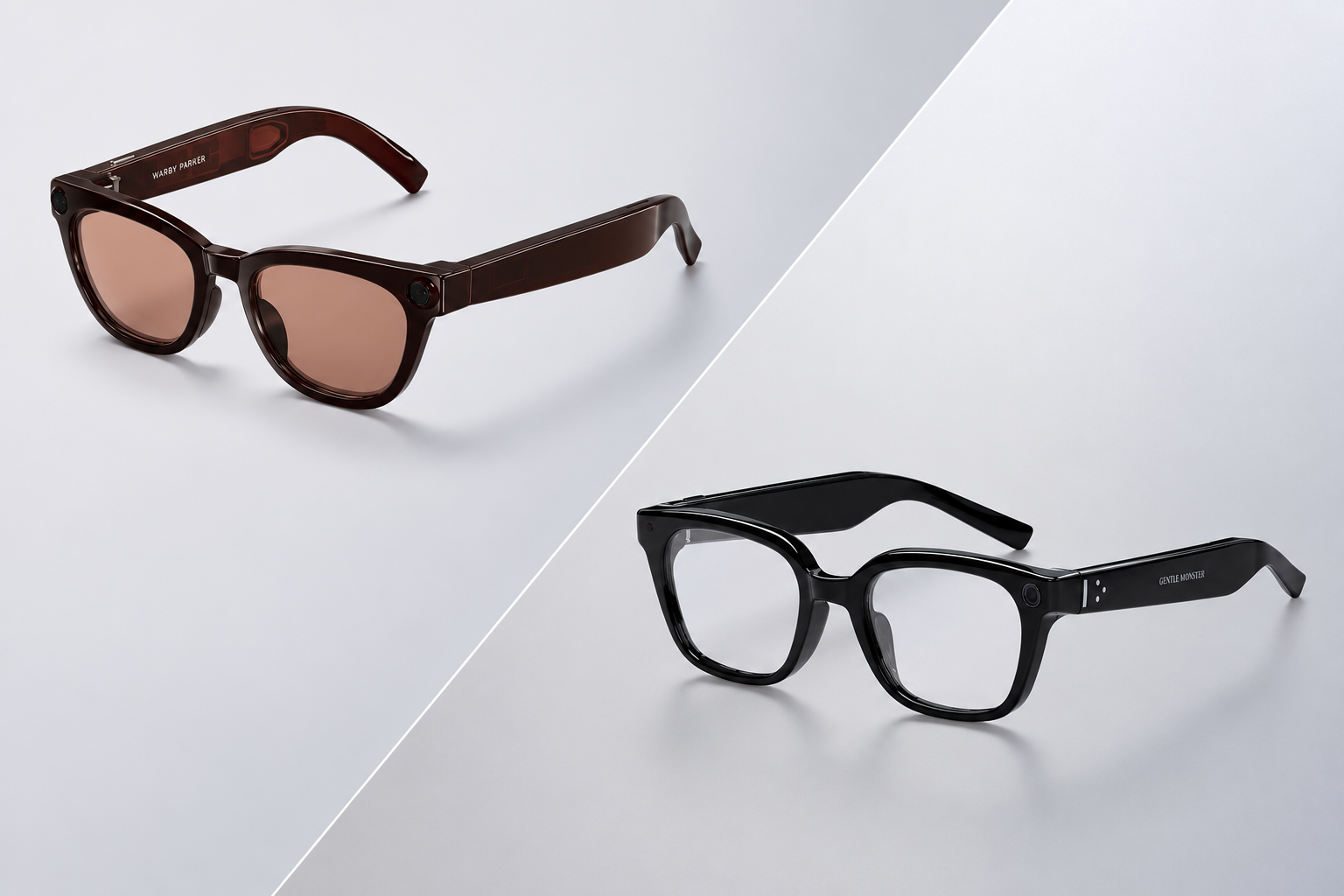
Samsung finally put its face-computer ambitions on stage. At Galaxy Unpacked in London on July 22, the company showed off its first smart glasses, an Android XR device co-developed with Google and running Gemini as the interface, with frame designs from eyewear brands Gentle Monster and Warby Parker. It is Samsung's clearest shot yet at Meta's Ray-Ban glasses, but this was a tease more than a launch: Samsung name-checked a fall release window without confirming price, weight, or a firm ship date (via Road to VR).
On the higher end of the market, Pimax has started shipping its Dream Air, a thin-and-light PC VR headset built around micro-OLED panels for sharp per-eye resolution. The rollout is happening in small batches, with Pimax saying it aims to clear all Dream Air preorders by August, a slow trickle rather than a wide release (via Road to VR).
Platform and industry
Amazon just gave its cloud-gaming service its biggest storefront yet. Starting July 23, the Luna game-streaming platform is baked directly into the Prime Video app on Fire TV in the US and UK, adding a new "Games" tab so subscribers can launch a game from the same app they use for movies and sports, no separate download required. Included at no extra cost for Prime members and playable with a controller or a phone, the move plants Luna in front of Amazon's roughly 200-million-strong Prime base, a distribution edge as Netflix and others push deeper into games (via VGC).