NASA and SpaceX complete critical wind tunnel tests on Starship reentry
Plus: SpaceX launched 24 Starlink satellites, Starship completed its softest ocean landing yet, and researchers uncovered how ancient asteroid impacts triggered global firestorms.
TL;DR
- NASA and SpaceX completed wind tunnel tests on Starship's Super Heavy Version 3 booster to prepare for Artemis lunar missions, updating flight controls and exterior design based on aerodynamic findings.
- SpaceX launched 24 Starlink satellites from California's coast and captured aerial footage of Starship's intact ocean landing after its Flight 13 test.
- New research shows Chicxulub's dust blanket intensified heat from falling debris to temperatures 17 times lethal to humans, explaining how the asteroid impact triggered global wildfires.
Launches and missions
Wind tunnel tests refine Starship for lunar return
NASA and SpaceX fine-tuned reentry aerodynamics for the redesigned Super Heavy booster headed to the Moon.
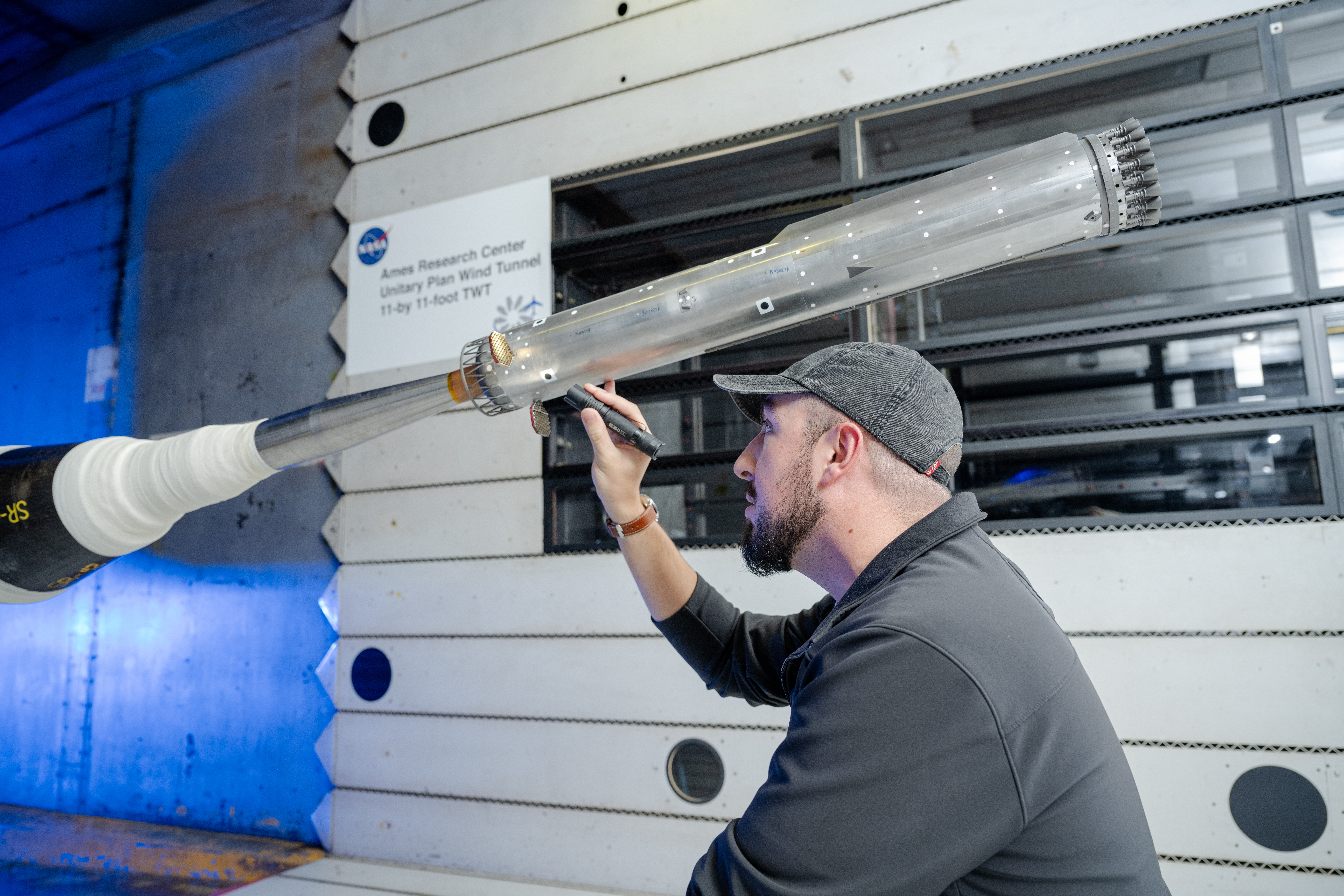
NASA and SpaceX completed wind tunnel testing on Starship's Super Heavy Version 3 booster at NASA's Ames Research Center on Friday, studying how the rocket's redesigned profile responds to extreme forces during atmospheric reentry. Engineers tested a 1.2% scale model in transonic and supersonic conditions to measure both steady aerodynamic forces and the unsteady buffeting the rocket will experience at speeds up to Mach 2.5. Version 3 carries three gridfins 50% larger than earlier models, new Raptor 3 engines, and an integrated hot stage in place of previous hardware, requiring fresh aerodynamic data to update flight control algorithms. The testing directly supports preparation for Artemis III in 2027 and a crewed lunar landing in 2028, with Starship HLS serving as the lander. (via NASA)
SpaceX launches 24 next-gen Starlink satellites. A Falcon 9 rocket lifted off from Vandenberg Space Force Base late Friday at 8:08 p.m. PDT, deploying 24 Starlink V2 Mini broadband satellites to low Earth orbit. The booster landed successfully, marking SpaceX's 90th orbital launch of 2026. (via Spaceflight Now)
Starship's softest splashdown yet captured on film. SpaceX released aerial footage Friday of Starship's Flight 13 upper stage completing an intact ocean landing in the Indian Ocean after launching next-generation Starlink V3 internet satellites on July 24. The 171-foot stage remained so gently intact that it floated serenely on the water days after splashdown, with onboard cameras still functional—a major milestone demonstrating improved reusability for the megarocket system. (via Space.com)
NASA plans two lunar orbit probes to study three-body gravitational effects. The space agency announced it will send two maneuverable spacecraft to lunar orbit to characterize the complex gravitational environment where Earth and Moon gravity combine. Flying in close formation, the CAPSTONE 02 probes will demonstrate autonomous navigation and cislunar communication while testing how spacecraft respond to three-body orbits—paths that exploit combined gravitational forces to reduce fuel requirements. Launch is planned for 2027. (via Space.com)
Space science
AI uncovers seven rare gravitational lenses hiding supermassive black holes
Machine learning identifies quasar gravitational lenses that could unlock how supermassive black holes form and grow.
Artificial intelligence identified seven exceptionally rare quasars exhibiting strong gravitational lensing, where a massive galaxy's gravity bends light from more distant objects into multiple paths across the sky. The discovery opens a new window onto supermassive black hole growth at cosmic scales, as these rare alignments let astronomers study black hole evolution at different ages across the universe's history. Each lens requires precise spatial alignment to create observable multiple images, making such systems rare finds without automated search methods. (via Space.com)
Moonquakes could expose buried lunar ice near the poles. Seismic vibrations from impacts and natural moonquakes could help reveal subsurface water ice deposits hidden beneath the lunar south pole, according to Friday analysis. The Moon's dry surface masks substantial frozen reserves in permanently shadowed craters—reserves critical for future crewed missions—and quake-induced vibrations could create acoustic signatures that orbital instruments can detect and map. (via Phys.org)
Martian water ice likely rests close to future landing zones. Scientists assessed the probability of subsurface water on Mars near planned exploration sites and found accumulations are more widespread than previously thought, lying accessible within a few meters of the surface in many candidate regions. Water access is essential for producing fuel and drinking water for human missions, and the fresh analysis suggests multiple viable landing zones promise adequate deposits. (via Phys.org)
Research and discovery
Asteroid dust blanket explains 66-million-year extinction from global firestorms
Chicxulub's atmospheric dust intensified impact heat to temperatures lethal within minutes across the entire planet.
New research reveals how the Chicxulub asteroid impact 66 million years ago triggered extinction-scale firestorms not just from the initial explosion, but from a secondary mechanism: ultrafine dust blanketing the atmosphere. When the 10-kilometer-wide asteroid struck Mexico's Yucatán Peninsula, it vaporized bedrock into particles fine enough to remain aloft and insulate the upper atmosphere for hours. This dust layer trapped and radiated heat downward, intensifying the already-intense pulse from falling rock fragments into temperatures 17 times hotter than the thermal threshold lethal to most animals. The combined effect—dust blanket plus falling debris—generated sustained temperatures that ignited worldwide wildfires and burned even thick-skinned creatures within minutes, explaining the rapid extinction across three-quarters of the planet's biota. (via Space.com)
Oil droplets behave like living cells under controlled conditions. NYU researchers enabled microscopic oil droplets to undergo complex shape transformations and engulf their surroundings, mimicking cellular reorganization and feeding. The experiments used light and chemical triggers to control the droplets' behavior, suggesting that self-assembly principles underlying life's organization might apply to non-living systems and opening new avenues for studying how chemistry first organized into primitive living matter. (via Phys.org)
Ancient diamond trapped water-bearing mineral from deep Earth. Scientists found evidence of a water-rich mineral preserved inside a diamond carried to the surface from the lower mantle, roughly 600 kilometers beneath the crust. The discovery adds to growing evidence that substantial quantities of water cycle through Earth's deepest layers, with implications for mantle chemistry and possibly the origin of Earth's surface water. (via Phys.org)
Strained metal oxide becomes magnetic in ultrathin form. Researchers found that extremely thin layers of ruthenium dioxide undergo a magnetic transition when their crystal lattice is mechanically strained, despite the bulk material remaining non-magnetic. The effect opens possibilities for engineering magnetic behavior in semiconductors and controlling electron behavior with external stress—a route toward new classes of electronics and quantum devices. (via Phys.org)
Climate and earth
Wildfires now generate their own extreme weather as climate intensifies
Massive blazes create atmospheric instability that spawns tornadoes, lightning, and other dangerous phenomena in addition to direct fire damage.

Large wildfires don't just spread; they generate their own extreme weather, from tornadoes to lightning to intense convective systems that amplify damage far beyond the burned area. Scientists identified four distinct mechanisms by which fires inject heat and smoke into the atmosphere and alter local air pressure and wind shear, triggering tornadic rotation and electrical discharge. As wildfires grow larger and hotter with warming temperatures, this amplification becomes more common and severe, transforming fire seasons into compounded disaster waves. (via Phys.org)
El Niño intensification fuels global heat and climate crisis. The strengthening El Niño pattern is "adding fuel to a planet already on fire," UN chief António Guterres warned this week, as the Pacific warming event combines with anthropogenic climate change to drive global temperatures toward new records. El Niño episodes typically cool the planet fractionally through natural cycles, but this year's intensification is occurring atop permanently elevated baseline temperatures, risking extraordinary heat extremes and cascading climate impacts across agriculture, water resources, and ecosystems. (via Phys.org)
Hungary shuts reactor as European heatwave peaks. Extreme summer temperatures forced Hungary to shut a nuclear power plant as cooling water reached unsafe temperatures, joining other European facilities in curtailing or halting operations during the regional heatwave. The closures underscore climate vulnerabilities in energy infrastructure as peak demand for cooling coincides with reduced capacity to generate power, a tension likely to worsen as warming accelerates. (via Phys.org)