TL;DR
- US and Iran both halted military operations for a second day; Trump administration weighing resumption while diplomats negotiate strait access.
- Brent crude fell to $98.38 per barrel on July 24, retreating from above $100 as traders assessed whether the pause signalled a genuine de-escalation.
- Houthi rebels attacked Saudi installations in the Red Sea on July 26; Riyadh retaliated hours before, escalating the Yemen spillover.
- Vice President Vance and Joint Chiefs Chairman Gen. Dan Caine told Trump on July 24 to reconsider wider military action over munitions stockpiles and broader implications.
Military operations
US and Iran pause strikes as diplomacy advances
After 13 consecutive nights of bombing, both sides halted military action for a second day running, signalling possible momentum toward negotiations.
The US military did not announce new strikes on Iran during the night of July 25-26, marking the first time in nearly two weeks that US Central Command (CENTCOM) held fire. A Department of Defense source told CNN operations were "on a hold." Iran reciprocated the pause, with Tehran also refraining from retaliatory attacks, and no Iranian strikes were reported in Bahrain, Jordan or Kuwait overnight (via CNN). The operational pause followed 13 consecutive nights of US bombing that ended late on July 23.
Military advisers counsel restraint. Vice President JD Vance and Chairman of the Joint Chiefs of Staff Gen. Dan Caine raised concerns about further escalation during a White House meeting on July 24, according to reporting by Benzinga and multiple wire services. Gen. Caine specifically cited the state of the US munitions stockpile and other potential strategic implications, though President Trump indicated after the meeting that the military could resume strikes or "make it a heavier dose" if needed (via Benzinga).
Trump signals openness to talks. Trump told reporters on July 24 that talks with Iran were ongoing and that Tehran appeared to be getting "more serious," though he made clear he retained the option to resume military action. No joint announcement of agreement between Washington and Tehran has been made.
Diplomacy and ceasefire talks
Oman presses Hormuz terms as US signals interest in negotiation
An Omani delegation visited Tehran to discuss reopening shipping lanes through the Strait of Hormuz, with Trump advisers backing a diplomatic track even as military options remain on the table.
An Omani delegation travelled to Tehran during the pause in military operations to advance talks on restoring commercial shipping through the Strait of Hormuz, the narrow channel between Iran and Oman through which roughly one-third of the world's seaborne oil passes. The channel has been disrupted by both US operations and Iranian threats to shipping (via Reuters and CNN reporting).
Background on mediation. Qatar and Oman have served as the primary channels between Washington and Tehran since the ceasefire collapsed in early July. A memorandum of understanding signed on June 14 was intended to end the conflict within 60 days, but both sides reported violations leading to resumed strikes. Earlier mediation efforts in Muscat on July 11 had outlined a proposal for reopening Hormuz during a 10-day ceasefire while longer-term arrangements were negotiated, but those talks ended without agreement (via recent coverage).
Pakistan explores talks. Pakistan was also involved in efforts to revive negotiations, with Pakistan exploring a path toward new talks in what has been described as a China-initiated push, according to reporting citing diplomatic sources.
Energy and shipping
Oil retreats from $100 as markets weigh de-escalation signals
Crude prices fell as the bilateral pause raised hopes for restored shipping, though war-risk premiums and reduced throughput kept the market elevated.
Brent crude oil, the international benchmark, fell to $98.38 per barrel by close of trading on July 24, down 2.29 percent from the previous day, as traders assessed the significance of the US military pause. The price had climbed above $100 a barrel just days earlier as the bombing campaign intensified (via markets data). West Texas Intermediate, the US benchmark, closed at $90.47 per barrel on July 24, down 1.87 percent, still up roughly 10 percent for the week on the back of earlier geopolitical tensions.
Shipping remains constrained. Traffic through the Strait of Hormuz was reported at only 10 vessels crossing on Tuesday and 16 on Monday, against an estimated 120 to 140 ships per day before the war. At the Bab al-Mandeb strait linking the Red Sea to the Gulf of Aden, crossings fell about 30 percent. War-risk insurance premiums remained elevated at between 7.5 and 10 percent of a vessel's hull value, up from 1 to 3 percent before the conflict. The freight rate to ship crude from the Gulf to China stood at $77.96 per tonne, roughly four times the five-year average (via Al Jazeera).
Regional spillover
Houthis strike Saudi coast as Red Sea escalates independent of US-Iran pause
Yemen's Houthi movement attacked Saudi infrastructure on July 26 in retaliation for Riyadh's strikes, demonstrating that the larger conflict spans multiple fronts despite the central pause.
Yemen's Houthis, the Iran-aligned movement that controls much of northern Yemen, attacked Saudi installations on the Red Sea coast on Saturday, July 26, according to reporting citing military statements. Saudi Arabia had struck Houthi targets on July 25 following what Riyadh said was a Houthi attack on Saudi shipping. Both sides' accounts of the exchanges are claims by parties to the conflict and cannot be independently verified (via The National).
**The maritime embargo.**The Houthis had declared what they called a maritime embargo on Saudi shipping earlier in the week, citing what they described as a years-long Saudi-led siege. President Trump said on July 23 that the United States would hold Iran responsible for Houthi attacks on shipping in the Red Sea, linking the Yemen front directly to the US campaign against Tehran. Iran denies directing Houthi operations (via CNBC).
Broader regional fallout. The conflict has also disrupted Iraq, where US-linked facilities have sustained strikes, and Syria, where the collapse of the Assad regime and IS resurgence have created conditions for further instability. Yemen itself remains fractionalised as southern factions contest each other for control, with Saudi Arabia and the UAE backing competing sides.
Nuclear programme and inspections
IAEA access remains blocked as enrichment continues unchecked
The UN nuclear watchdog still cannot verify Iran's uranium enrichment status after inspectors were withdrawn; the last confirmed measurement of Iran's stockpile came in June.
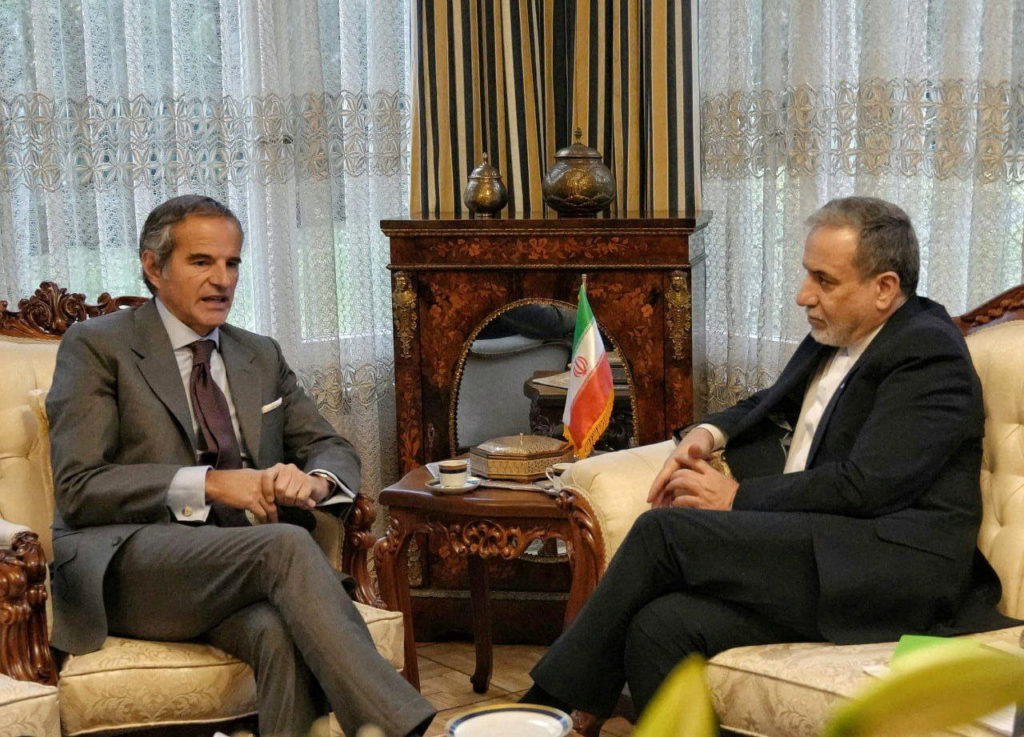
The International Atomic Energy Agency (IAEA), the UN body responsible for inspecting nuclear sites, says it cannot verify whether Iran has suspended all uranium enrichment. Iran suspended cooperation with the agency, inspectors were withdrawn, and the IAEA says it has lost what it calls continuity of knowledge about Iran's nuclear materials. The agency's last verification of Iran's stockpile of uranium enriched to 60 percent came in June, when the inventory stood at about 440.9 kilograms. Uranium enriched to 60 percent is well above the level needed for civilian power and a technical step short of weapons-grade, which is roughly 90 percent (via PBS NewsHour).
Impasse over resumed access. Iran has said any new IAEA visit to its sites would come only after a final political deal, while the agency has pressed to resume inspections immediately. The standoff remained unresolved as of July 26, with no new inspection access reported.
Global reaction and sanctions
UN warns of deepening crisis as Security Council remains split
International powers have diverged sharply on how to respond to the conflict, with the Security Council unable to agree on blame or on a path forward.

UN Secretary-General António Guterres warned in July that the situation was getting out of control and urged the United States, Iran and the Houthis to stand down, cautioning that a return to full-scale war would inflict an intolerable toll on civilians and carry severe consequences for the global economy. He called specifically on the Houthis to halt attacks on shipping (via UN News).
Diplomatic fault lines. Russia and China have continued to back Tehran diplomatically, condemning the US strikes and calling for a return to negotiations, while Western governments including Canada and Australia have supported the American position. The UN Security Council remains divided, with earlier votes splitting the permanent members over how to apportion blame for the fighting and what measures to recommend. Sanctions discussions have stalled amid the broader disagreement.