TL;DR
- US Central Command said it completed a 13th consecutive night of strikes on Iranian military targets on July 23; battle damage cannot be independently verified.
- Iran rejected a reported US ceasefire proposal said to have been delivered by Iraq's prime minister, whose office called the report unfounded.
- Brent crude topped $100 a barrel; Strait of Hormuz shipping fell to roughly 10 to 16 vessels a day, per S&P Global data cited by Al Jazeera.
- Yemen's Houthis claimed attacks on two Saudi oil tankers and declared an embargo on Saudi shipping; Saudi Arabia said it struck Houthi targets in Yemen.
Military operations
US Central Command (CENTCOM), the American military command responsible for the Middle East, said it completed a 13th consecutive night of strikes on Iran late on July 23. In its statement, CENTCOM said the strikes ran more than two hours and hit Iranian military command centres, drone storage sites, communications networks, coastal surveillance posts and what it called maritime attack capabilities, framing the campaign as an effort to protect commercial shipping from the Islamic Revolutionary Guard Corps (via U.S. Central Command). The extent of the damage and whether the stated objectives were met cannot be independently verified.
Iranian outlets reported explosions across several sites after the July 23 strikes. Iran's Tasnim news agency, which is affiliated with the Revolutionary Guard, cited authorities in Khuzestan province as saying four people were killed and five wounded in a strike near Ahvaz, and Iranian media reported blasts at Khorramabad, Jask, Bandar Abbas and on Qeshm Island (via US News). These locations and tolls come from Iranian sources and have not been independently confirmed.
On the American side, the Pentagon said at least four US service members had been killed in the most recent wave of Iranian strikes, and the US military said it had disabled a tanker that tried to bypass its blockade of Iranian ports. Both are claims by parties to the conflict (via Haaretz). The renewed bombing campaign followed the collapse of an interim truce reached in June and resumed in early July.
Diplomacy and ceasefire talks

Several outlets reported on July 24 that Iran had rejected a US ceasefire proposal said to have been carried to Tehran by Iraqi Prime Minister Ali al-Zaidi, with Iranian officials quoted as saying they would not accept a temporary arrangement that left control of the Strait of Hormuz unresolved (via The Jerusalem Post). The account was disputed: the Iraqi premier's office called the report unfounded, and Iran's foreign ministry pushed back on the framing, with Foreign Minister Abbas Araghchi telling state television that the obstacle was what he called Washington's illogical and controlling outlook (via i24NEWS).
President Donald Trump signalled he was not ready to negotiate a new ceasefire and was weighing a larger strike, according to reporting on July 24, days after several consecutive nights of American attacks (via Time). The two governments give conflicting accounts of who broke the earlier truce, each blaming the other.
The mediation track runs mainly through Oman and Qatar, both of which have relayed messages between Washington and Tehran. Regional mediators discussed a proposal in Muscat on July 11 that would have reopened both Hormuz shipping lanes during a 10-day ceasefire while a longer-term arrangement was negotiated, but those talks ended without agreement and were followed by renewed attacks on shipping (via MS NOW).
Energy and shipping
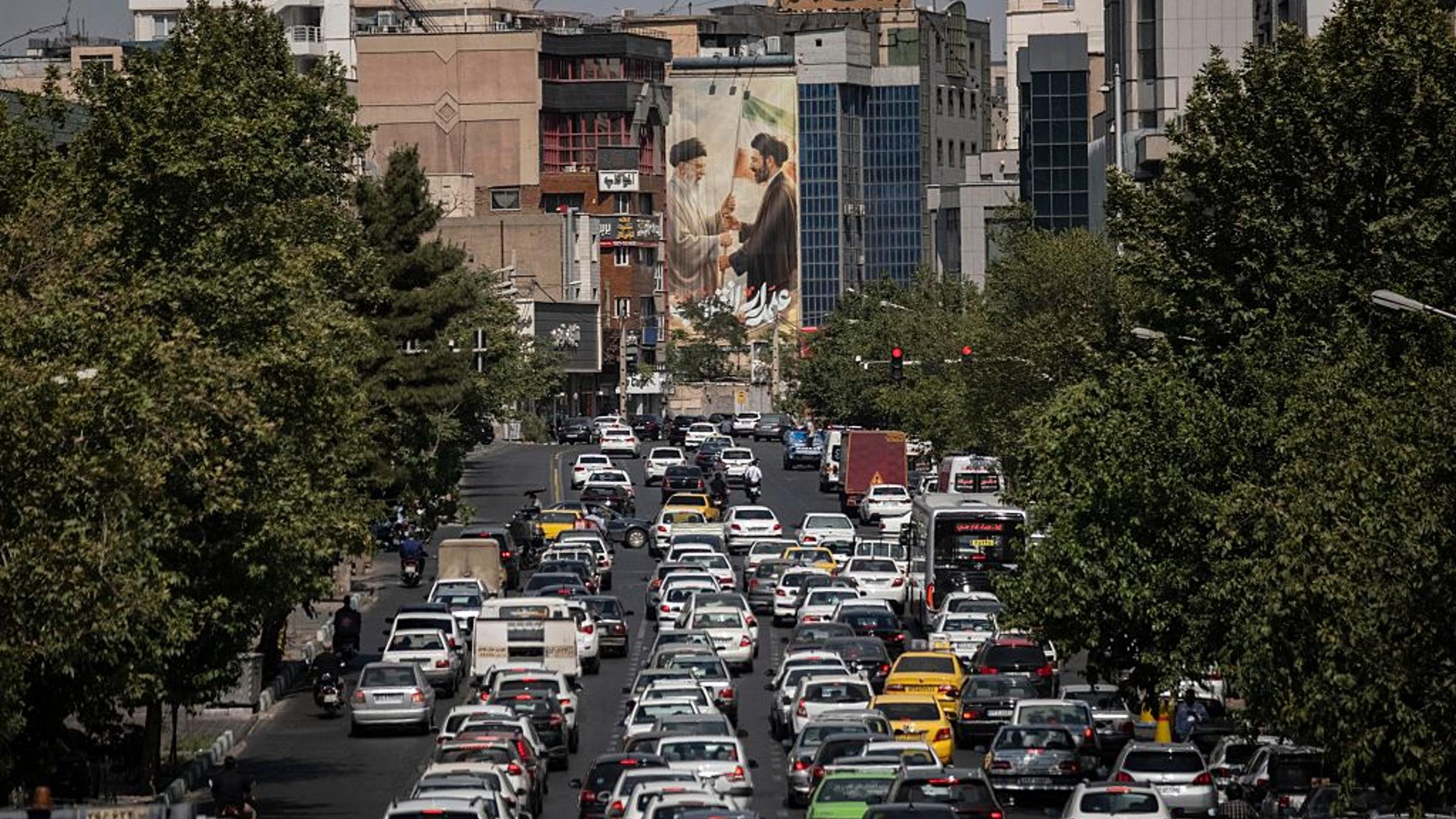
Brent crude, the international oil benchmark, rose above $100 a barrel on July 23 as the US launched fresh strikes and the Strait of Hormuz stayed disrupted (via Time). The Strait of Hormuz is the narrow channel between Iran and Oman through which a large share of the world's seaborne oil passes.
War-risk insurance for ships crossing the strait has climbed sharply. Al Jazeera, citing S&P Global, reported that premiums rose to between 7.5 and 10 percent of a vessel's hull value, up from 1 to 3 percent before the fighting, and that the freight rate to ship crude from the Gulf to China reached $77.96 per tonne, about four times the five-year average of $18.91 (via Al Jazeera). War-risk premiums are the surcharge insurers add for sailing through a conflict zone.
Traffic through the two chokepoints has thinned. S&P Global data cited by Al Jazeera showed 10 vessels crossing Hormuz on Tuesday and 16 on Monday, against an estimated 120 to 140 ships a day before the war, while crossings at the Bab al-Mandeb, the strait linking the Red Sea to the Gulf of Aden, fell about 30 percent to 29 vessels (via Al Jazeera). Reuters and other wire services report similar figures; exact daily counts vary by source.
Regional spillover

Yemen's Houthis, the Iran-aligned movement that controls much of northern Yemen, said on July 22 that they had attacked two Saudi oil tankers, the Encelia and the Layla, in the Red Sea using missiles and drones, and declared what they called a maritime embargo on Saudi shipping in response to what they described as a years-long siege (via Al Jazeera). The scale of any damage to the vessels was not independently confirmed.
Saudi Arabia said it struck Houthi targets in Yemen after the tanker attacks, and a Houthi official said one strike hit the port of Hodeidah on July 24 (via The National). Both sides' accounts of the exchanges are claims by parties to the fighting.
President Trump said on July 23 that the United States would hold Iran responsible for Houthi attacks on shipping in the Red Sea, tying the Yemen front directly to Washington's campaign against Tehran (via CNBC). Iran denies directing Houthi operations.
Humanitarian impact
Iran's health ministry said 59 people had been killed and 666 injured in Iran since June 27, when the renewed campaign began, according to ministry spokesperson Hossein Kermanpour (via CNN). The figure comes from an Iranian government source, covers the period stated, and has not been independently verified; it should not be read as a confirmed toll.
On the American side, the Pentagon said at least four US service members had been killed in recent Iranian strikes (via Haaretz). Casualty counts on both sides are contested and are reported by parties to the war; independent confirmation of the circumstances and numbers is not available.
Nuclear programme and inspections
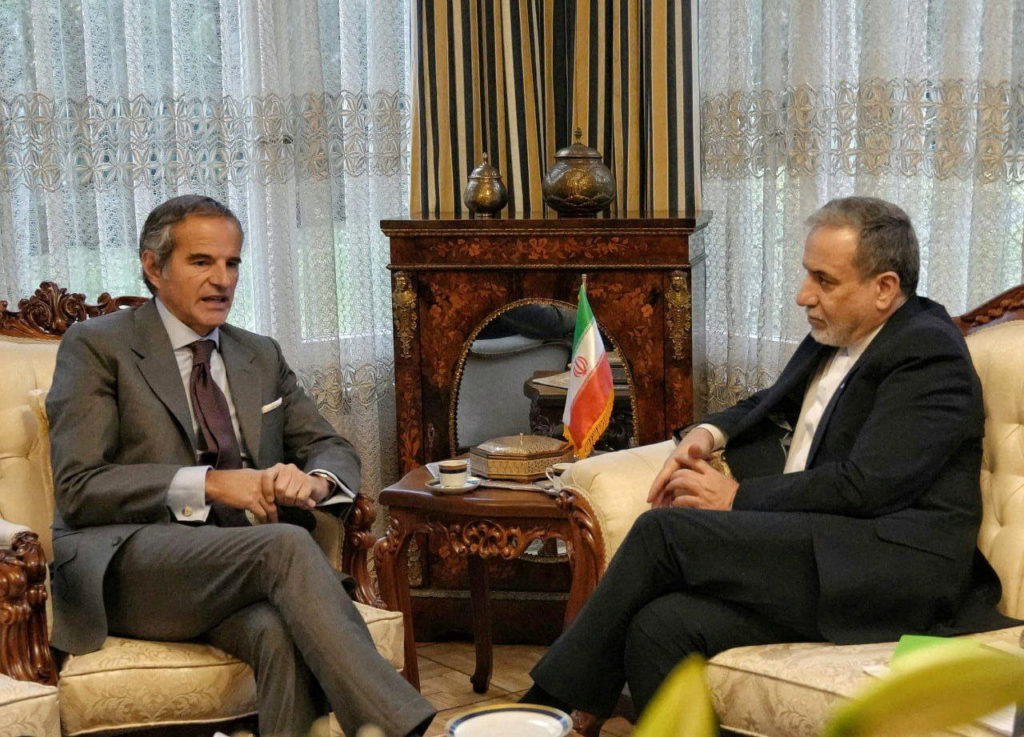
The International Atomic Energy Agency (IAEA), the UN body that inspects nuclear sites, says it cannot verify whether Iran has suspended all uranium enrichment. Iran suspended cooperation with the agency, its inspectors withdrew, and the IAEA says it has lost what it calls continuity of knowledge about Iran's nuclear materials; the agency says the last time inspectors verified Iran's stockpile of about 440.9 kilograms of uranium enriched to 60 percent was in June (via PBS NewsHour). Uranium enriched to 60 percent is well above the level needed for civilian power and a technical step short of weapons grade, which is about 90 percent.
The standoff over access remains unresolved. Iran has said any IAEA visit to its sites would come only after a final deal, while the agency has pressed for inspections to resume. No new inspection access had been reported as of the latest available accounts.
Global reaction and sanctions

UN Secretary-General Antonio Guterres warned in July that the situation was getting out of control and urged the United States, Iran and the Houthis to pull back, cautioning that a return to full-scale war would take an intolerable toll on civilians and carry severe consequences for the global economy (via UN News). He specifically called on the Houthis to halt attacks on shipping.
Russia and China have continued to back Tehran diplomatically, condemning the US strikes and calling for a return to negotiations, while Western governments including Canada and Australia have supported the US position, according to a running tally of statements (via The Washington Institute). The UN Security Council remains divided, with earlier votes splitting the permanent members over how to apportion blame for the fighting.