TL;DR
- The KOSPI plunged about 5.7 percent Friday to near 6,690, extending a violent slide that has triggered trading curbs almost every session since mid-July.
- Samsung and SK Hynix are set to sign very large memory chip supply deals with US firms as President Lee courts Nvidia, OpenAI, Anthropic and Broadcom in San Francisco.
- South Korea's economy grew 0.6 percent in the second quarter, beating forecasts on a semiconductor export boom and putting 3 percent annual growth within reach.
- The special counsel probe into former President Yoon Suk-yeol and ex-first lady Kim Keon-hee won a 30-day extension, pushing the reckoning into late August.
Politics

The clock was about to run out on South Korea's biggest political investigation, so lawmakers just wound it back up. The National Assembly extended the sweeping special counsel probe into former President Yoon Suk-yeol and his wife, ex-first lady Kim Keon-hee, giving investigators another 30 days past the July 24 deadline to keep digging into the December 2024 martial law fiasco, the death of a young Marine, and a tangle of corruption allegations around the former first couple (via The Korea Times). The extra time also keeps Kim in the frame after the Supreme Court delayed a closely watched ruling in her opinion-polls case, buying the prosecution room to fold in a lower court verdict that found Yoon partly guilty (via The Korea Herald).
Trade is the storm cloud over Seoul this week, and a top security aide is telling Koreans to brace for more. President Lee Jae-myung's national security adviser warned that Washington may slap fresh duties on Korean goods as a US Section 301 decision looms, a reminder that the tariff truce struck last year is anything but settled (via Korea JoongAng Daily). The warning lands as Lee tours the United States, a trip where economics and diplomacy are impossible to separate.
Business and economy
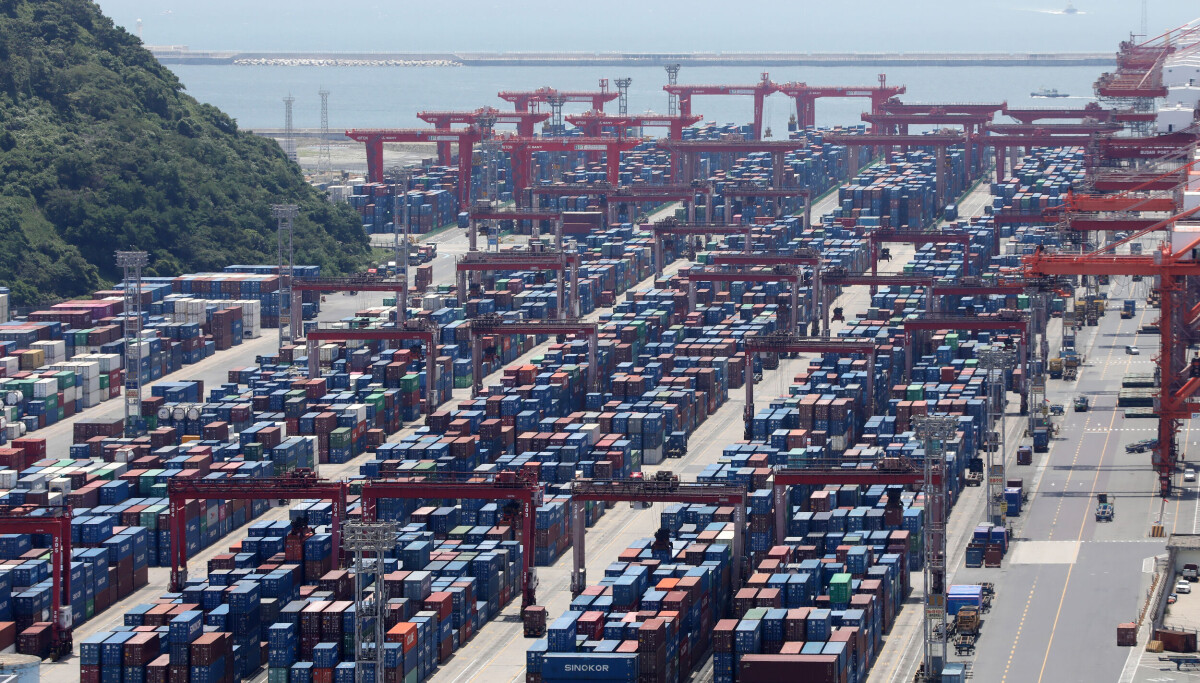
Chips carried the whole economy again. South Korea's GDP grew 0.6 percent in the April-June quarter, comfortably ahead of the 0.4 percent economists expected and miles above the Bank of Korea's own gloomy 0.2 percent guess, powered by a 1.4 percent jump in exports led by semiconductors and equipment (via Korea JoongAng Daily). Output rose 3.7 percent from a year earlier, a hair below the first quarter's 3.8 percent, and the central bank now says its full-year 3 percent target is back within reach.
South Korea is back on Washington's currency watch list, and Seoul wants you to relax about it. Analysts told local media the US Treasury's monitoring label carries no immediate teeth and is unlikely to move the won much, framing it as a diplomatic irritant rather than a market event (via The Korea Times).
Drivers get a reprieve at the pump. The government extended its fuel tax cuts through the end of September, keeping a lid on gasoline and diesel prices as Middle East tensions send crude jumping (via The Korea Times). The measure, first rolled out years ago as a temporary cushion, has now become a semi-permanent fixture of Korean budget policy.
Markets
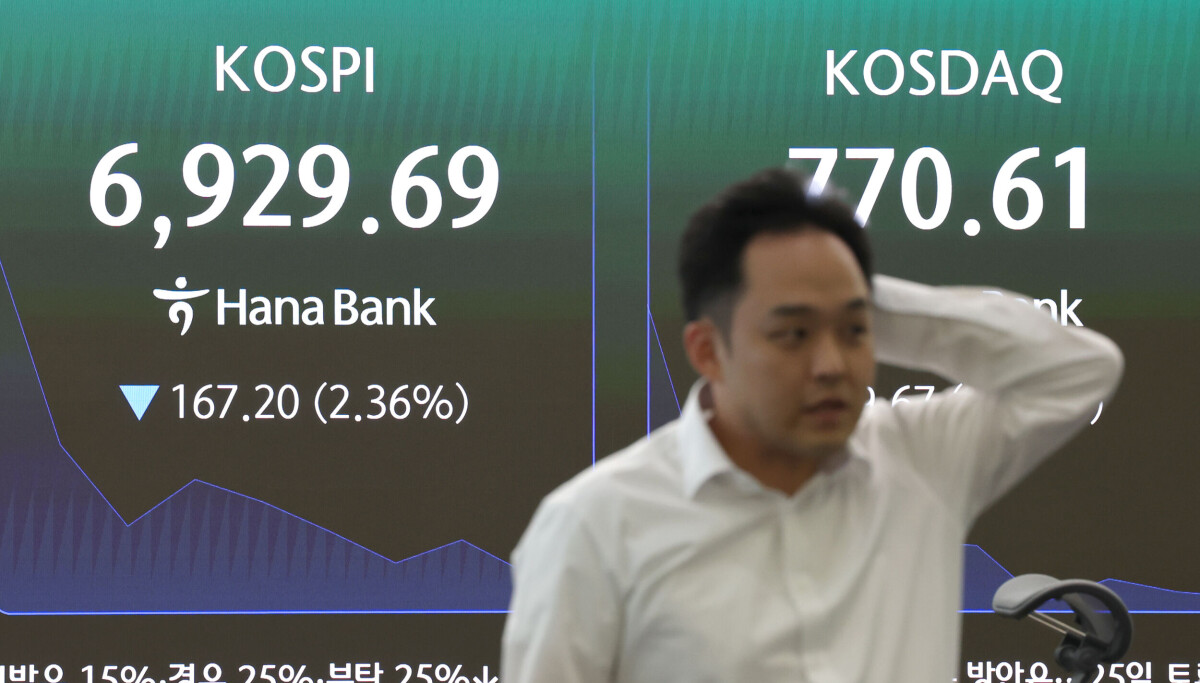
Seoul's stock market is in free fall, and the circuit breakers can barely keep up. The KOSPI plunged again on Friday, closing down roughly 5.7 percent near 6,690, as the Korea Exchange fired off a sell-side sidecar to freeze program trading during the rout (via Korea JoongAng Daily). A sidecar kicks in when KOSPI 200 futures drop 5 percent or more for at least a minute, and the market has been tripping the safeguard almost daily as chip heavyweights Samsung Electronics and SK Hynix get hammered, dragged down by a Wall Street tech selloff and President Trump's threats of military action against Iran (via The Korea Times). It is a jarring reversal for an index that hit record highs only weeks ago.
The won, at least, found some footing. The currency firmed earlier in the week after the surprisingly strong second-quarter growth print, giving traders a rare bright spot before equities resumed their slide (via The Korea Times).
Technology
The pitch is simple: America needs memory, and Korea makes it. Samsung Electronics and SK Hynix are poised to sign what Seoul officials call "very large" chip supply deals with US technology companies, timed to President Lee Jae-myung's Silicon Valley swing, with the packages likely to bundle long-term memory contracts, investment tie-ups and memorandums of understanding (via The Korea Herald). SK Hynix, now the world's top supplier of high-bandwidth memory to Nvidia's AI chips, and Samsung both stand to lock in years of demand from the data-center buildout, and officials say Lee's visit acted as the catalyst that finally closed long-running negotiations.
Lee is treating this trip as an AI alliance roadshow. In San Francisco he lined up back-to-back meetings with the industry's biggest names, Nvidia's Jensen Huang, OpenAI's Sam Altman, Anthropic's Dario Amodei and Broadcom's Hock Tan, pitching Korea's mega-projects and preparing to unveil a "San Francisco AI Declaration" before sitting down with top venture capital firms (via The Korea Herald). The message to global tech: Korea wants to be a core node in the AI supply chain, not just a components vendor.
Society and culture

Korean summers are not just hotter, they are longer, and the data now proves it. Analysis of decades of records shows the average onset of heat-wave season has crept forward from July 19 to June 24, while the sweltering stretch now drags on until late August, roughly 10 days later than it did in the 1970s (via The Korea Times). The split-screen weather on Friday captured the new normal: monsoon rain with thunder pounding Seoul and Gangwon while the south baked at up to 38 degrees Celsius, with tropical nights that never cool below the mid-20s becoming a routine part of the Korean summer.