TL;DR
- Samsung and SK Hynix signed $950 billion in long-term chip supply deals with US tech companies, anchoring Korea's role in the AI supply chain.
- The ruling Democratic Party pushed its prosecution reform bill toward final passage, seeking to strip investigators of independent authority.
- The KOSPI rallied Thursday to 7,097 as semiconductor stocks advanced, bouncing back from July's brutal selloff and circuit-breaker streak.
- Extreme heat warnings spread across southeastern Korea with temperatures exceeding 38°C, breaking previous summer records.
Politics
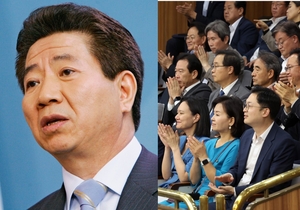
The Democratic Party is on the cusp of rewriting criminal justice. The ruling party announced it will push a revision to the Criminal Procedure Act to the floor for a party-line vote, stripping the prosecution of independent investigative powers in its latest move on a decades-old reform drive (via The Korea Herald). The shift would separate investigative and prosecutorial authority after years of debate over prosecutorial overreach.
President Lee Jae-myung is trading diplomatic victories for chip deals in Silicon Valley. Lee met with Nvidia's Jensen Huang, OpenAI's Sam Altman, Anthropic's Dario Amodei, and others while pitching Korea as a crucial node in the AI supply chain, not just a components vendor (via The Korea Herald). The trip is timed to seal the landmark tech partnerships announced this week.
A religious sect's influence over the Democratic Party is drawing fire. Allegations that the Shincheonji church group meddled in Democratic Party leadership elections have widened to touch ruling party power circles, complicating an already fraught internal contest (via The Korea Times).
Business and economy
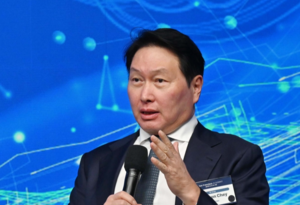
A billionaire's divorce bill is creating waves at SK Telecom. SK Group Chairman Chey Tae-won faces a roughly 944 billion won (about $645 million) settlement that has rattled investors, who are now speculating whether the company will need to raise dividends to cover the obligation (via The Korea Herald). The sum rivals small M&A deals and marks one of Korea's costliest divorce settlements.
Samsung is betting smartphone know-how wins the smart glasses race. Samsung is developing wearables that complement smartphones rather than replace them, positioning its devices against Meta's ambitions for glasses as a standalone computing platform (via The Korea Times).
South Korea's per capita GDP is edging toward $39,000 this year, continuing a steady climb as semiconductor-driven exports fuel the economy and offset persistent headwinds in housing and employment.
Markets

Seoul's stock market found its footing this week after a brutal July meltdown. The KOSPI rallied Thursday, closing at 7,097 as semiconductor stocks advanced for a third straight session, with Samsung Electronics and SK Hynix both gaining ground on better sentiment toward tech (via The Korea Times). The bounce offers a rare reprieve from the circuit-breaker chaos that defined early July.
The won is doing the heavy lifting. The currency strengthened to around 1,465 per dollar this week, its highest level since early May, as better growth prospects and fresh foreign investor demand for Korean assets supported the currency (via The Korea Times).
The Bank of Korea signaled more tightening ahead. After raising rates to 2.75 percent on July 16 for the first time in three and a half years, the central bank pledged to keep hiking until inflation converges toward its 2 percent target, pinned now at 3.2 percent after sustained energy price pressure from Middle East tensions.
Technology
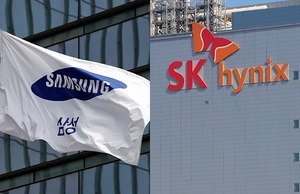
Korea just locked down the global AI supply chain. Samsung Electronics and SK Hynix signed what Seoul officials call "very large" deals worth roughly $950 billion with US tech companies to supply long-term memory contracts bundled with investment tie-ups, timed to President Lee's Silicon Valley swing (via The Korea Herald). SK Hynix, now the world's leading supplier of high-bandwidth memory to Nvidia's AI chips, and Samsung both secured years of locked-in demand from the data-center buildout.
Samsung targets mass production of its latest AI memory modules. The chipmaker plans to mass-produce CXL Memory Module-DRAM (CMM-D) 3.0 based on the latest CXL 3.2 specification by year-end, positioning itself to compete with SK Hynix's new IMTE architecture that boosts AI inference efficiency by 35.7 percent over conventional approaches (via The Korea Times).
Society and culture

Korea's heat is breaking records and spreading inland. Authorities issued the highest-level heat warnings for southeastern regions where temperatures exceeded 38 degrees Celsius, a sign of how the traditional hot zone is widening as climate shifts compress the summer calendar (via The Korea Herald). Overnight lows in the mid-20s are now a summer norm rather than an anomaly.
Young Koreans are getting priced out of homeownership. Property ownership among those under 40 has fallen to a record low, opening a generational wealth chasm as housing affordability collapses and families without existing assets lose a crucial wealth-building tool (via The Korea Times).
Korea's cultural heritage is drawing crowds in Busan. A Korean heritage exhibition at the UNESCO World Heritage Committee meeting in Busan attracted over 70,000 visitors in its first week, exceeding expectations and showcasing the country's arts and traditions to a global audience.
Sports

South Korea kicked off its World Cup campaign with a comeback win. Midfielder Hwang In-beom equalized and substitute Oh Hyeon-gyu completed the turnaround in the 80th minute for a 2-1 victory against the Czech Republic, sending crowds at Seoul's Gwanghwamun Square into celebration (via The Korea Times). The winning start boosts confidence for Korea's bid to reach the knockout stage for a second straight World Cup.
Son Heung-min extended his goal-scoring streak. The Korean forward netted in his third consecutive MLS match, continuing his recent run of form with LAFC and adding to his reputation as one of Korea's most consistent international performers (via The Korea Times).