TL;DR
- SpaceX Starship's 13th flight deployed 20 Starlink satellites and made its softest splashdown yet, though the booster's landing burn misfired.
- US measles cases reached 2,318, a 34-year high, raising fears the country could lose its elimination status.
- NASA's Juno found Jupiter's moon Io radiates up to 30 times Earth's total heat, driven by underground tidal heating.
- Physicists confirmed a 35-year-old prediction, measuring ytterbium quantum states that survive more than 30 seconds.
Launches and missions
SpaceX's Starship notched its cleanest flight yet. Flight 13 lifted off from Starbase, Texas on July 24, deployed all 20 next-generation Starlink V3 satellites, and made the gentlest upper-stage splashdown to date in the Indian Ocean. The catch: the Super Heavy booster lit only 5 of 13 engines on its landing burn and hit the Gulf hard. (via Space.com)
A robot mechanic is now headed to the orbit where dead satellites drift. A Falcon 9 launched Northrop Grumman's Mission Robotic Vehicle on July 21, carrying the Naval Research Laboratory's dual-armed RSGS payload for a roughly decade-long mission to inspect, repair, relocate and refuel client satellites in geosynchronous orbit, about 36,000 km up. (via Spaceflight Now)
Space science
Jupiter's moon Io runs hotter underground than anyone could see from above. NASA's Juno probe used its microwave radiometer during two close flybys to read Io's temperature a few meters beneath the crust, finding tidal flexing pumps out up to 30 times Earth's total heat output. The peer-reviewed work appeared in the Journal of Geophysical Research: Planets. (via NASA/JPL)
A Chinese Mars orbiter turned its camera on a visitor from another star. Tianwen-1 photographed 3I/ATLAS, only the third known interstellar object, from about 30 million km away as the comet swept past Mars last October. The images, released this week, capture its glowing coma and tail. (via Space.com)
Research and discovery

Physicists just confirmed a 35-year-old prediction about how long an atom can hold a quantum state. Using two trapped ytterbium ions, a Dutch-Australian team measured "metastable" states that survive for roughly 1, 10 and more than 30 seconds, an eternity in quantum terms, offering fresh resources for qubits and atomic clocks. Peer-reviewed, in Physical Review A. (via Phys.org)
A workhorse chemo drug may finally shed its brutal side effects. Researchers in India fused cisplatin with an existing drug to make "cisproplatin," which killed cancer as effectively across the NCI's 60-cell-line panel but spared mice much of the usual kidney and nerve damage. It is still preclinical, with no human trials yet. Published in the Journal of Medicinal Chemistry. (via Medical Xpress)
The placebo effect isn't one thing in the brain, it's several. Pooling brain scans from 409 people across 16 studies, a German-led team found that different ways of inducing a placebo (verbal suggestion versus conditioning) leave distinct neural signatures rather than sharing a single pathway. Peer-reviewed, in Nature Communications. (via Medical Xpress)
Industry and policy

The Pentagon just tripled its launch budget ceiling. The Space Force raised the cap on its National Security Space Launch Phase 3 Lane 1 contracts from $5.6 billion to $17 billion through fiscal 2029, bracing for a surge in military satellite launches. (via SpaceNews)
Who signs off on a space tug or an orbiting factory? The Commerce Department's Office of Space Commerce is pushing ahead with a voluntary "mission authorization" system to license novel activities no other US agency covers, and will soon issue a call for pilot companies. (via SpaceNews)
Health and biology
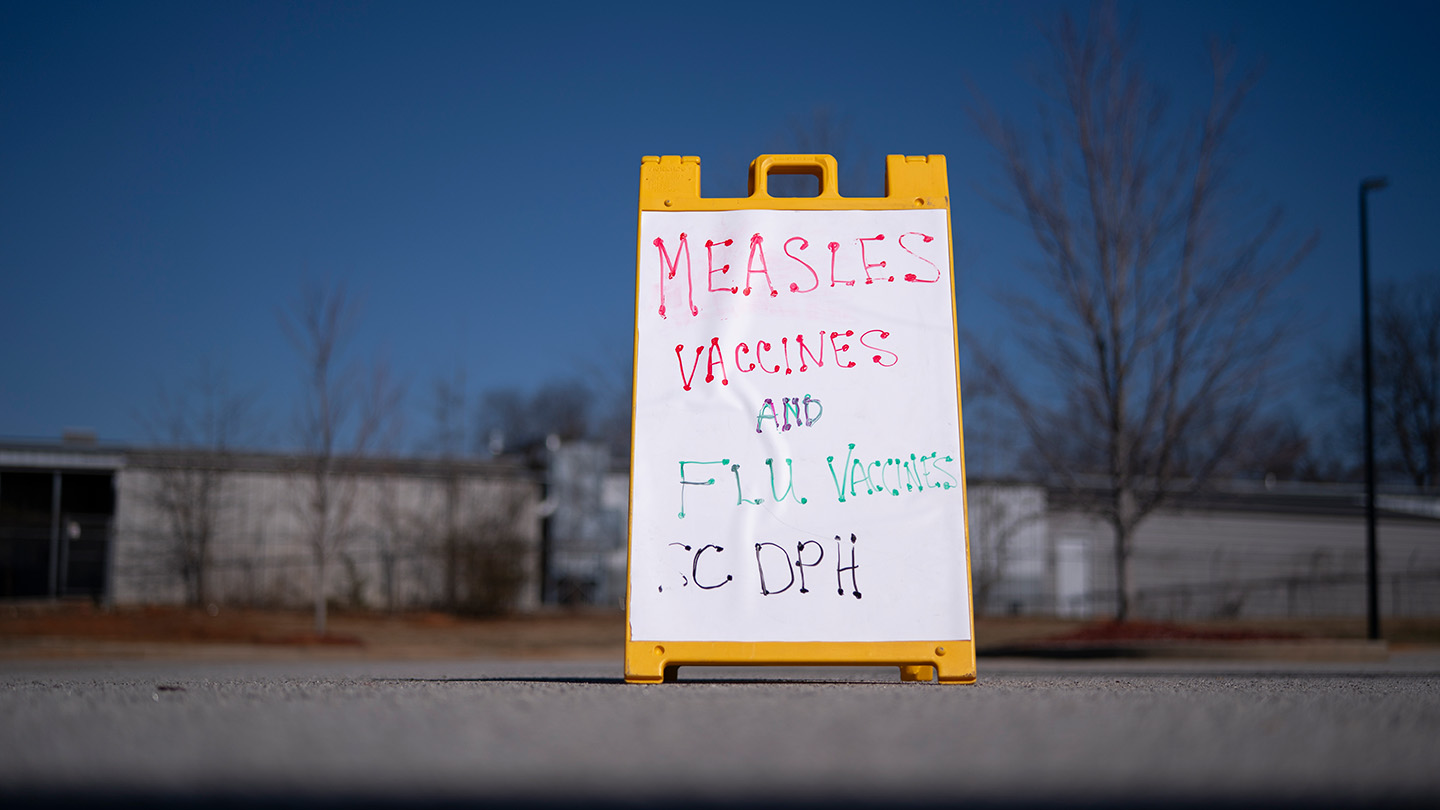
US measles cases just hit a 34-year high. The CDC counted 2,318 infections as of July 24, edging past 2025's record and the most since 1992, stoking fears the country could lose the measles-elimination status it earned in 2000. (via Science News)
An oral vaccine took aim at one of the world's leading causes of childhood diarrhea. In a small trial, only 3 of 34 people given the experimental WRSs2 shot for Shigella sonnei fell ill after deliberate exposure, versus 21 of 26 who got placebo. Peer-reviewed, in The Lancet Infectious Diseases. (via Science News)
Climate and earth

Small tropical islands could face dangerous humid heat for up to 320 days a year by 2100. Under a high-emissions path, a new study projects Heat Index values of 46 to 63°C on low-lying islands, places with little terrain to escape it. Peer-reviewed, in Geophysical Research Letters. (via Phys.org)
The rivers feeding the American West's biggest reservoir are drying at the source. Colorado's West Slope basins, which supply 70% of Lake Powell's water, could see inflows fall as much as 50% by midcentury as snow melts earlier. Peer-reviewed, in Earth's Future. (via Phys.org)